Most hyperhidrosis advice assumes you can just leave the room when you start sweating — step outside, go change, cool off. A full-time job doesn’t really give you that option. You’re in the same meeting, the same client call, the same open-plan office for eight hours, and you don’t get to just disappear when your body decides it’s time to soak through your shirt. Workplace stress directly increases sweat gland activity, which means the job itself can make hyperhidrosis worse, not just expose it. I’ve been managing this for years now, and what actually works isn’t some miracle product — it’s a routine, a few specific habits, and knowing exactly what’s in my bag before I leave the house. Here’s what I actually do, not just what sounds good in theory.
Why Work Is a Different Kind of Hard
Sports and gym settings at least come with an excuse built in — everyone expects you to sweat there. An office doesn’t give you that cover. Visible sweat in a professional setting carries social and career pressure that physical activity settings don’t. A handshake with a damp palm, a client noticing a mark on your shirt mid-presentation, or just the constant background anxiety of “is it showing right now” — none of that goes away just because you’re sitting at a desk instead of running. And because stress itself triggers more sweating, worrying about sweating at work can genuinely make you sweat more at work. It’s a loop, and the only way out of it is having a routine solid enough that you’re not spending mental energy worrying about it in the first place.
What I Actually Wear to Work
Color and fabric do most of the heavy lifting before any trick or product comes into play. I stick to dark colors and busy patterns as my base — I’ve written a full breakdown of why in how to hide sweat stains, but the short version is that black, charcoal, and navy hide moisture marks far better than pastels or bright solids ever will. For material, I go with the same logic I use everywhere else: synthetic or blended moisture-wicking fabrics over pure cotton, since cotton holds onto sweat instead of moving it away from your skin. I’ve also rebuilt my entire “safe shirt” rotation around styles that genuinely don’t show sweat, which I covered separately in shirts that don’t show sweat.
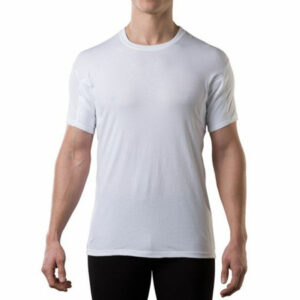
Underneath whatever I’m wearing, I almost always have a sweatproof undershirt on. A sweatproof undershirt creates a barrier layer that stops sweat before it ever reaches your outer shirt, which matters more at work than anywhere else, since your outer shirt is the thing everyone else actually sees. I’ve tested a lot of these — SUTRAN Technology and Thompson Tee are both in regular rotation for me, and I’ve reviewed a full list of options in my best hyperhidrosis clothing brands roundup if you want to compare specific products.
The Sweat Pad Trick I Use With Every Shirt
This is the one thing I get asked about the most once people notice I mention it: I put panty liners inside my shirts and undershirts, right at the underarm. It sounds unusual the first time you hear it, but it works because a thin adhesive liner absorbs sweat at the source and can be swapped out mid-day, which a shirt on its own can’t do. I stick one to the inside of the underarm on both my undershirt and, on heavier sweat days, the outer shirt too. When it’s saturated, I swap it for a fresh one in the bathroom — takes about thirty seconds, and nobody has ever noticed.
Regular thin, unscented panty liners work fine for this — I use Always Thin Unscented Daily Liners, mostly because they’re cheap, sold everywhere, and the adhesive backing sticks to fabric just as well as it’s meant to stick to underwear. If you’d rather use something actually designed for this exact purpose, purpose-built underarm sweat pads like Kleinert’s Underarm Sweat Pads are shaped specifically for the armpit and tend to sit a little more securely through a full day of movement.
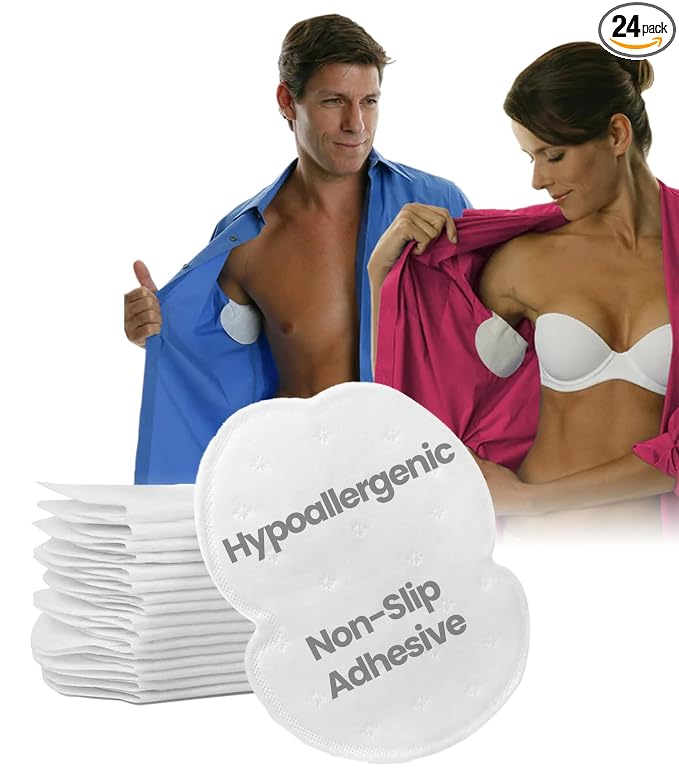
Either option costs a fraction of a sweatproof undershirt, fits in a coat pocket, and solves the exact problem those shirts solve — just without needing to plan your whole outfit around it. I keep a small stash of both in my desk drawer at all times.
Why I Never Leave the House Without a Towel
This is the other habit that’s non-negotiable for me: a small towel, always in my bag. A quick pass with a towel removes surface sweat before it evaporates and cools the skin, which cuts down on the clammy, overheated feeling that makes you sweat even more. I don’t wait until I’m visibly drenched — I use it proactively, usually right before a meeting or after a walk from the parking lot, specifically so I’m starting the next hour dry instead of playing catch-up.
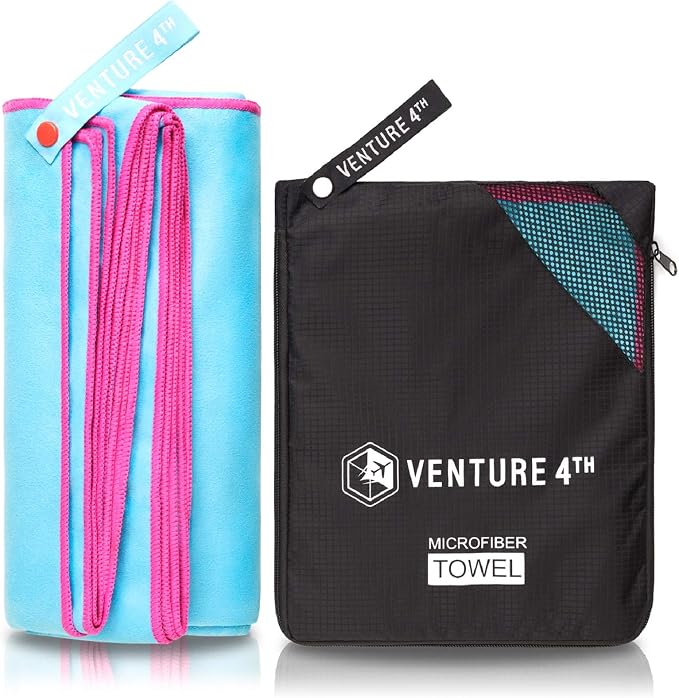
I use a compact microfiber towel rather than a regular hand towel, mainly because it actually dries fast enough to reuse a few times before it needs to go in the wash. The VENTURE 4TH Quick Dry Microfiber Travel Towel comes in a small carry bag that fits easily in a laptop bag or purse without looking out of place, and it’s odor-resistant, which matters when it’s living in a bag with you all day.
What’s Actually in My Desk Drawer
Between the liners and the towel, I keep a small “emergency kit” at my desk so I’m never depending on remembering everything every single morning:
- A spare undershirt, folded flat in a drawer
- A small stash of underarm liners or pads
- Travel-size antiperspirant, in case my morning routine needs a top-up
- The microfiber towel, kept in my bag rather than the drawer so it’s with me in meetings too
- A couple of individually wrapped body wipes, for the days a full towel-off isn’t enough
The point of the drawer isn’t that I need all of it every day — it’s that on the one day I do need it, I’m not scrambling or trying to hide a problem with nothing on hand to fix it.
Getting Through Meetings and Presentations
Meetings are their own specific problem, mostly because you can’t just get up and leave when you feel it starting. A few things that have made a real difference for me:
- I towel off right before walking in, not during. Once you’re already sweating in front of people, it’s much harder to catch up than to start dry.
- I avoid seats directly under vents or in direct sun through a window when I have the choice — small temperature differences make a bigger difference than people expect.
- I keep a glass of cold water nearby, less for drinking and more because holding something cold for a moment genuinely helps bring your temperature down before a handshake.
- I stopped trying to hide that I run warm. Mentioning offhand that I sweat more than average, once, early on, took away a lot of the anxiety of someone else noticing and wondering. It sounds counterintuitive, but the secrecy was making the stress-sweat loop worse than the sweating itself.
The Mental Side Isn’t Separate From This
Anxiety about sweating and the sweating itself feed each other, which means managing one without the other only gets you halfway there. All the clothing and towel tricks in the world help less if you’re spending the whole meeting bracing for a sweat mark to show. I’ve gone into this in a lot more depth in my post on hyperhidrosis and mental health, but the short version that’s helped me most at work specifically is having a routine solid enough that I trust it — once you’re not mentally checking every five minutes, the anxiety part of the loop actually calms down on its own.
Quick Answers About Managing Hyperhidrosis at Work
Can I really use panty liners for underarm sweat?
Yes. A thin, unscented liner sticks to fabric the same way it sticks to underwear, and it absorbs and blocks sweat at the underarm just as well as a product marketed specifically for that purpose, usually for a fraction of the cost.
How do I tell my workplace I have hyperhidrosis?
You don’t have to disclose anything medically specific if you don’t want to. A brief, casual mention that you run warm or sweat more than average is usually enough to remove the anxiety of someone else noticing and wondering, without needing a formal conversation.
Should I apply antiperspirant in the morning, or reapply during the day?
Both, if you sweat heavily. A strong application before bed works best for underarm antiperspirants specifically, but keeping a travel-size backup at your desk for a midday top-up covers the gap on harder days.
What’s the single easiest habit to start with?
Keeping a spare undershirt and a small stash of underarm liners at your desk. It’s the lowest-effort change on this list and covers the majority of “what if” scenarios on its own.
Conclusion
None of this makes hyperhidrosis disappear at work — nothing really does. But a dark, moisture-wicking outer layer, a sweatproof undershirt, a stash of underarm liners, and a towel I actually use proactively instead of reactively have turned something that used to control my whole workday into something I barely think about anymore. Start with whichever piece feels most manageable — for most people that’s the liners, since they’re cheap and you probably already have something similar in a bathroom cabinet — and build the rest of the routine around it. And if you’ve built all of this and you”re still struggling, it”s worth looking at options beyond clothing and habits — I’ve compared Brella, Botox, Sofdra, and iontophoresis directly if you want to see what else is out there.
This post reflects my own personal experience managing hyperhidrosis in a professional setting. Some links in this post are affiliate links — if you make a purchase through them, I may earn a small commission at no extra cost to you.