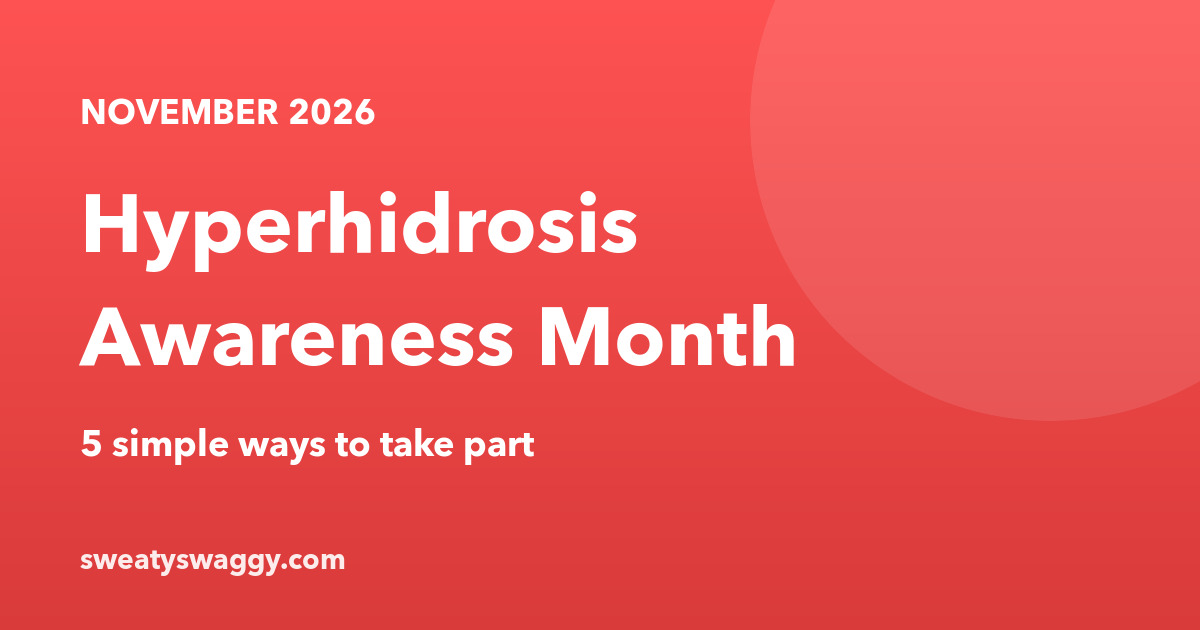
November is Hyperhidrosis Awareness Month. The International Hyperhidrosis Society (IHhS) opened this year’s campaign on November 2, and this blog is joining in. If you sweat far more than you should, or you know someone who does, this month is a good reason to talk about it out loud.
The short version: excessive sweating is a medical condition, not a hygiene problem. It is common, it is often undiagnosed, and there are real treatments. Awareness Month is about making that easier to say and easier to act on.
Why awareness matters
These are the figures the IHhS is using for this year’s campaign. They are the society’s numbers, not mine:
- 385 million people worldwide (4.8%) live with hyperhidrosis.
- 27% of adults with it are never diagnosed.
- People with hyperhidrosis face nearly three times the risk of anxiety and depression.
That last number is the one I think about most. Wet hands, soaked shirts and the effort of hiding it all take a toll, and many people carry it alone because they assume nothing can be done. I wrote about the emotional side in Hyperhidrosis and Mental Health.
This year the IHhS is also including disruptive body odor in the conversation, because members of its community raised it as a concern that goes hand in hand with sweating.
5 simple ways to take part
1. Say the word. “Hyperhidrosis” is a real diagnosis. Using it, even once, in a post, a message or a conversation, helps other people realise that what they have has a name. The IHhS suggests the hashtags #HyperhidrosisAwarenessMonth and #KnowSweat2026.
2. Share your story, in whatever way feels safe. You don’t need to show anything. A sentence about what your worst situation is (handshakes, keyboards, exams, dates) is enough for someone to feel less alone. If you want a place to read how others cope, see accepting hyperhidrosis and adapting to it.
3. Send the right resource to someone who needs it. If a friend, coworker or family member sweats heavily and has never looked into it, these two pages are a gentle starting point: the Find what fits you tool on the homepage (four quick questions, no sign-up) and the guide to support groups and resources online.
4. If you have never been diagnosed, book one appointment. The IHhS has a clinician finder for doctors who treat hyperhidrosis. A visit can lead to options you may not have tried, from prescription antiperspirants to iontophoresis, Botox or oral medication. My overview is in Brella, Botox, Sofdra and iontophoresis compared. This is general information, not medical advice, so your own doctor should guide the decision.
5. Follow and amplify the official campaign. The IHhS shares ready-made posts, quizzes and graphics at its Awareness Month page. It is on Facebook (@SweatingStopsHere), and on X and Instagram (@WeKnowSweat). Sharing one post takes a few seconds.
If you are new here
This blog is about living with hyperhidrosis day to day: clothes that hide sweat, products worth trying, treatments and honest experience. A good place to start is the list of treatments and products available worldwide or the country-by-country guide if you want to see what is sold where you live.
You are not alone in this, and you are not “just sweaty.” Have a good Awareness Month.